Textile history · Domestic life
From Loom to Living Room: The Cultural Journey of Flax-Woven Coverings
A length of cloth can do more than cover a bed or soften a chair. For centuries, flax textiles have carried the imprint of farming, labor, trade and taste into the most ordinary rooms of the home. Their story is practical first—and cultural all the way through.
Before a woven covering became an accent folded across the end of a bed, it was a solution to a familiar problem: how to make a household more comfortable with the materials at hand. Cloth kept warmth close, protected a mattress or seat from wear, and could be moved, repaired, washed and used again. In flax-growing regions, linen offered a particularly adaptable answer. It could be made into substantial household fabric or a lighter layer, and its everyday usefulness gave it a place in domestic life long before “decorative throw” became a recognizable category.
The history of flax-woven coverings is not a straight march from necessity to luxury. Practical and expressive uses have always overlapped. A woven cloth might be prized because it was serviceable, because it represented hours of skilled labor, because its pattern identified a regional tradition, or because its color and texture transformed a room. The modern linen throw blanket inherits all of these possibilities. It is a useful layer, but also a small statement about how we want home to feel.
A plant becomes a household material
Linen begins with flax, a plant cultivated for both its fibers and its seeds. The long fibers in the stem can be processed into yarn, but reaching that point involves a sequence of demanding tasks. After harvesting, stalks are dried and treated so that the useful fibers can be separated from the woody core. The fibers are then cleaned, combed and spun. The resulting yarn is woven into cloth, sometimes finished further to alter its hand, appearance or suitability for a particular use.
That transformation links a domestic object to land and labor. Climate, soil, harvest practices and the knowledge of growers all shape the raw material; the decisions of spinners and weavers shape what it becomes. Linen’s characteristic texture is not simply a surface effect. It reflects the structure of flax fiber and the many choices involved in turning it into thread and cloth. For people encountering a linen bed throw today, the irregularities that give the fabric its lively, natural appearance can be reminders of that material history.
Flax has a long history in human societies, though the surviving evidence varies greatly by place and period. Archaeological finds of plant fibers and textiles are fragile witnesses: cloth decays, while conditions that preserve it are unusual. As a result, historians must distinguish between what is well documented and what remains uncertain. The broad account is clear enough—people developed sophisticated ways to cultivate, process and weave plant fibers over millennia—but no single origin story can explain every regional tradition.
The loom’s quiet revolution
Weaving turns separate threads into a stable surface. In a basic woven structure, lengthwise threads, called the warp, are interlaced with crosswise threads, called the weft. The pattern of their intersection affects the cloth’s strength, flexibility, texture and appearance. A plain weave can be dependable and versatile; other structures create more pronounced patterns or surfaces. The loom may change, from simple hand-operated equipment to increasingly complex machinery, but the central principle remains the same: order, tension and repeated movement make cloth.
For much of history, textile production was embedded in household economies and local systems of work. Spinning and weaving demanded time, training and equipment. In many places, the making and care of textiles formed part of women’s labor, though the organization of work varied by culture, class and period. Cloth could be made for a family’s own needs, exchanged locally, or produced for wider markets. The boundary between household craft and commercial production was often porous.
That labor gives coverings a significance that is easy to miss when they are treated only as interior accessories. A substantial piece of cloth represents decisions about fiber, yarn, weave, dimensions and finish. It may also represent repeated acts of mending and laundering over years. In a household where textiles were valuable, a cover was not disposable decoration. It was a resource to be protected and passed along, adapted as needs changed.
Beds, warmth and the layered home
Sleeping arrangements have never been identical across time or place. Climate, wealth, available furniture and local customs influenced what people slept on and under. In some households, bedding consisted of multiple layers, with coverings added or removed according to season. In others, a shared sleeping space served several purposes by day and night. A woven textile could function as a bedcover, a protective layer, a wrap or a portable piece of household equipment. The words used for such objects have shifted, and modern labels like “throw” should not be applied too neatly to every historical cloth.
Even so, the practical logic is enduring. A covering adds insulation without requiring a permanent change to the room. It can be folded away, moved between sleeping and sitting spaces, and used to protect more expensive bedding. Linen’s capacity to make a breathable, comparatively light fabric suited it to layered use, although its warmth depends on construction, weight and what it is combined with. A loosely woven linen cloth and a dense linen-wool textile are not interchangeable simply because both contain flax.
Household textiles also helped organize the bedroom as a place of display. Clean, well-kept bedding could signal order and care; fine cloth could mark means or social standing. Such meanings did not erase the work involved. Washing, drying, ironing, airing and storing large textiles required effort, fuel, water and space. The visual ideal of a carefully dressed bed rested on a practical infrastructure that was often invisible to the people who admired it.
From sitting room to public image
Coverings migrated easily from the bed to seating. A cloth laid over a bench or chair could protect upholstery from dust and wear, offer a warmer surface, or disguise damage. Draped across a sofa, it could also change a room without changing its furniture. This adaptability is one reason throws persist across styles of domestic life: they are modest in scale, but highly effective at shifting comfort and appearance.
As furniture and room arrangements changed, textiles changed with them. The spread of upholstered seating created new surfaces to protect and decorate. The growth of specialized rooms in some households gave textiles more opportunities to signal taste: a sitting room could be arranged for visitors, while bedrooms retained more private functions. In the modern home, the same piece may move between sofa, reading chair and bed, following the rhythms of a day rather than belonging to one fixed purpose.
Industrialization altered the scale and economics of cloth production. Mechanized spinning and weaving increased output and helped make textiles more widely available, while changing the nature of work and the relationship between makers and consumers. Handmade production did not disappear, but it existed alongside factory goods and, in many places, became associated with particular kinds of value: regional identity, skilled workmanship or distinctive irregularity. The story is not simply that machines replaced craft. It is that different production methods developed side by side, each shaping what people expected from fabric.
Pattern as memory and meaning
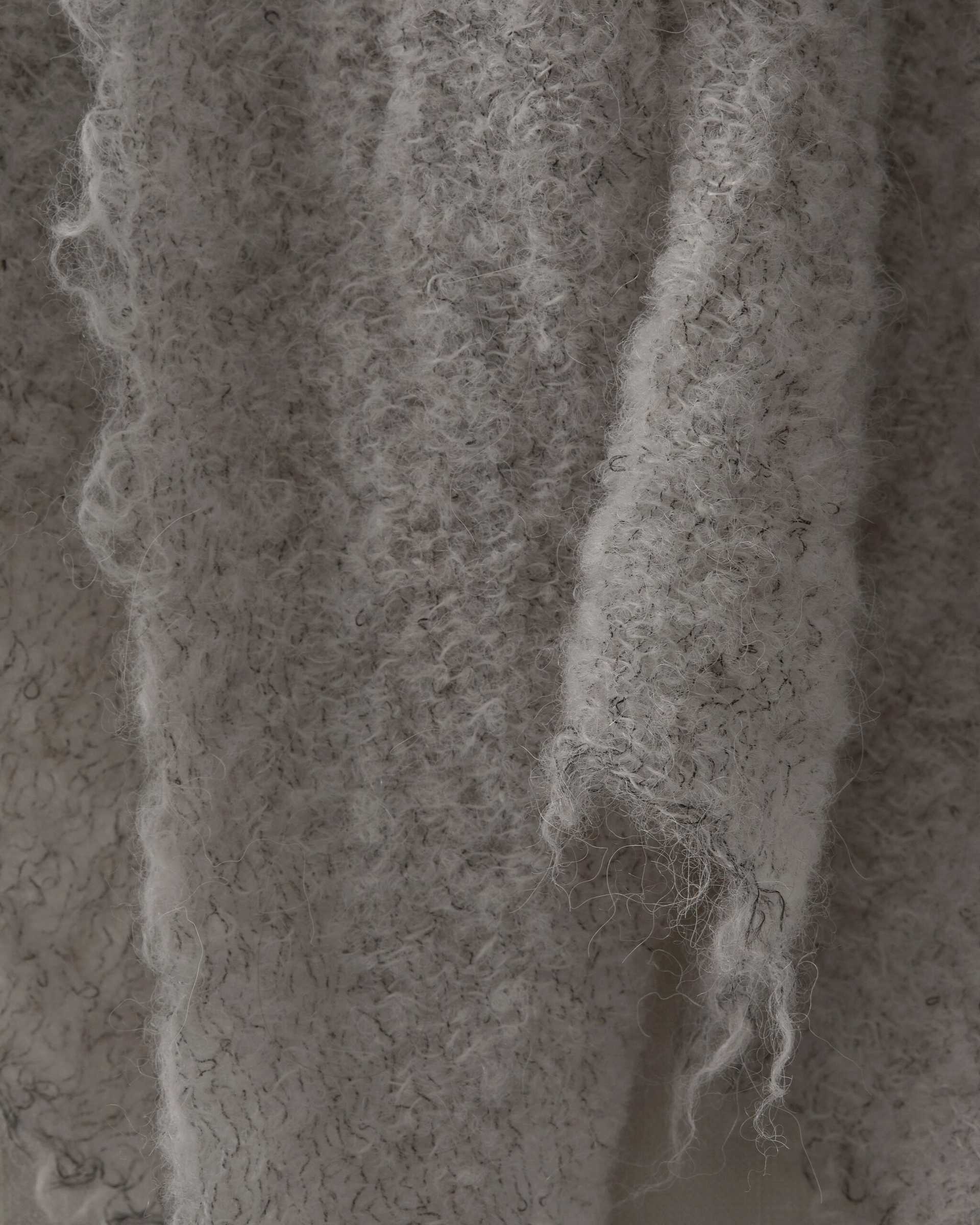
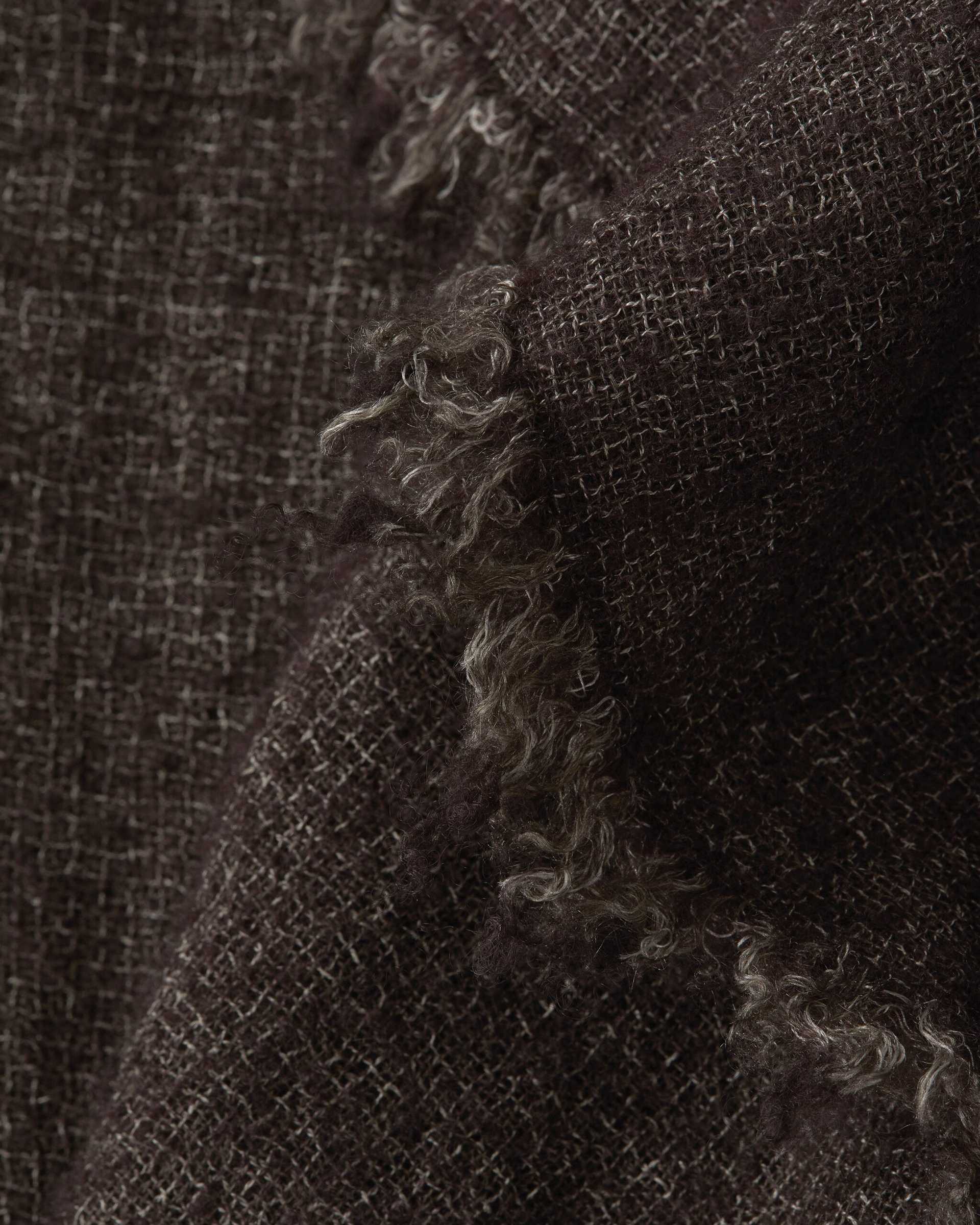
Stripes, checks, borders and woven textures can make a covering recognizable at a glance. Pattern is not merely applied decoration; in woven cloth, it can be built into the structure through the arrangement of threads and colors. A border may frame the surface, while a stripe can emphasize the direction of the weave or the edges of a textile. Fringe, where present, may finish the ends or continue the visible logic of the yarns.
Designs travel. Threads, techniques and tastes move through trade, migration, political change and the circulation of finished goods. Yet a pattern should not be assigned a cultural meaning without evidence. Similar geometric forms can arise in different places, and a design’s meaning may change over time. Careful textile history therefore asks more than “What does this motif symbolize?” It asks where an object was made, what materials it contains, how it was used, and what records or comparable objects can tell us.
Color also reveals the relationship between cloth and its world. Natural flax tones may range from pale, cool shades to warmer browns, depending on fiber and processing. Dyed yarns introduce another set of decisions, shaped by available dyes, techniques, cost and fashion. A restrained palette can make a covering feel quiet; a bold stripe or check can turn it into the room’s focal point. In either case, the design joins everyday use to the visual culture of the household.
What “linen” means today
In common usage, linen refers to fabric made from flax fiber. But contemporary home textiles often combine fibers to balance different qualities. Linen blended with wool, for instance, brings together flax’s crisp, breathable character with wool’s warmth and elasticity. Other combinations can alter softness, weight, drape or durability. The material label matters because a linen-wool throw does not necessarily require the same care as a piece made from 100% linen.
Finishing can change how linen feels and looks. Washing or stonewashing may soften the surface and create a relaxed appearance; a more structured finish may preserve a sharper line. Weave density and yarn size influence weight and drape. A medium-weight, fringed linen covering can function as a year-round layer in some settings, while a substantial wool blend is more suited to adding warmth. Descriptions such as “lightweight” or “breathable” are useful, but they do not replace attention to fiber content and construction.
Modern choices also carry questions about origin and production. A label may identify where flax was grown, where yarn was woven, or where a finished textile was made; these are different stages and should not be confused. Terms associated with a particular region or industry can describe specific production contexts, but they do not automatically reveal every detail of a supply chain. For readers interested in textile heritage, asking precise questions about material and manufacture is one way to connect present-day objects to the longer history of cloth.
The care that extends a textile’s life
Durability depends on more than fiber. Weave, seams, fringe, use and care all matter. Linen can soften through use and washing, but that does not mean every linen textile should be handled identically. A delicate weave, a blended construction or an artisanal finish may call for gentler treatment than a sturdy plain weave. The care instructions supplied for a particular item should take precedence over broad rules about linen.
When washing is permitted, avoiding unnecessary heat and abrasion can help preserve texture and color. Overloading a machine can strain a heavy covering, while harsh bleach may damage fibers or finishes. Line drying is often recommended for delicate or fringed textiles, but the label remains the most reliable guide. For a valuable or unusually constructed piece, professional cleaning may be worth considering. Care is not a footnote to textile history: it is part of the long chain of decisions that allows an object to remain useful.
Repair, too, belongs in the story. A loose edge or small tear need not end a textile’s working life. Mending may be visible or discreet, and in some traditions it becomes part of the object’s character. The modern preference for a fresh, flawless surface can obscure a different historical standard, in which a well-used textile was evidence of care rather than neglect. A covering that has been maintained over time carries a record of household practice in its softened fibers and repaired seams.
Why the linen throw endures
The contemporary linen throw blanket has a familiar place in the home because it answers several needs at once. It adds a layer of warmth, protects a surface, introduces texture and can be moved wherever comfort is wanted. Linen’s appeal is partly tactile—the dry, natural hand of the fiber—and partly visual, with a surface that catches light differently from smooth, uniform fabrics. Its appeal is also historical: it connects the modern home to a material shaped by cultivation, processing and generations of textile knowledge.
That connection should not romanticize the past. Flax processing and textile production were labor-intensive, and the availability of fine household cloth depended on resources and social conditions. Nor should every contemporary linen product be treated as a direct continuation of an ancient technique. Technologies, markets and consumer expectations have changed. What persists is a set of practical questions: How should a covering feel? How long should it last? What should it protect? What can its pattern or texture add to a room?
The answers are visible in the objects themselves. A plain woven cloth may emphasize utility; stripes, checks or fringe may lend it a more defined presence. A linen bed throw can bridge the private language of bedding and the public face of a sitting room. Folded neatly, it suggests order. Left casually across a sofa, it makes an invitation. In both settings, it remains a piece of cloth doing the work cloth has always done: adapting itself to the life around it.
A domestic history still being woven
Textile history is often told through famous garments, rare tapestries and museum objects. But the ordinary covering deserves attention, too. It occupies the intimate scale of the home, where material culture is handled daily rather than encountered behind glass. It can be washed, folded, carried, mended and shared. Its significance lies not only in how it was made but in the routines it made possible.
From field to fiber, from fiber to yarn, and from yarn to woven surface, flax carries the marks of skilled work. From bed to chair, from cool season to warm one, a covering carries the marks of use. The modern throw may be chosen for a muted stripe or a soft washed finish, but behind that choice lies a long history of making domestic life more comfortable and more expressive. The loom is distant from the living room only in space. In every woven layer, the two remain connected.